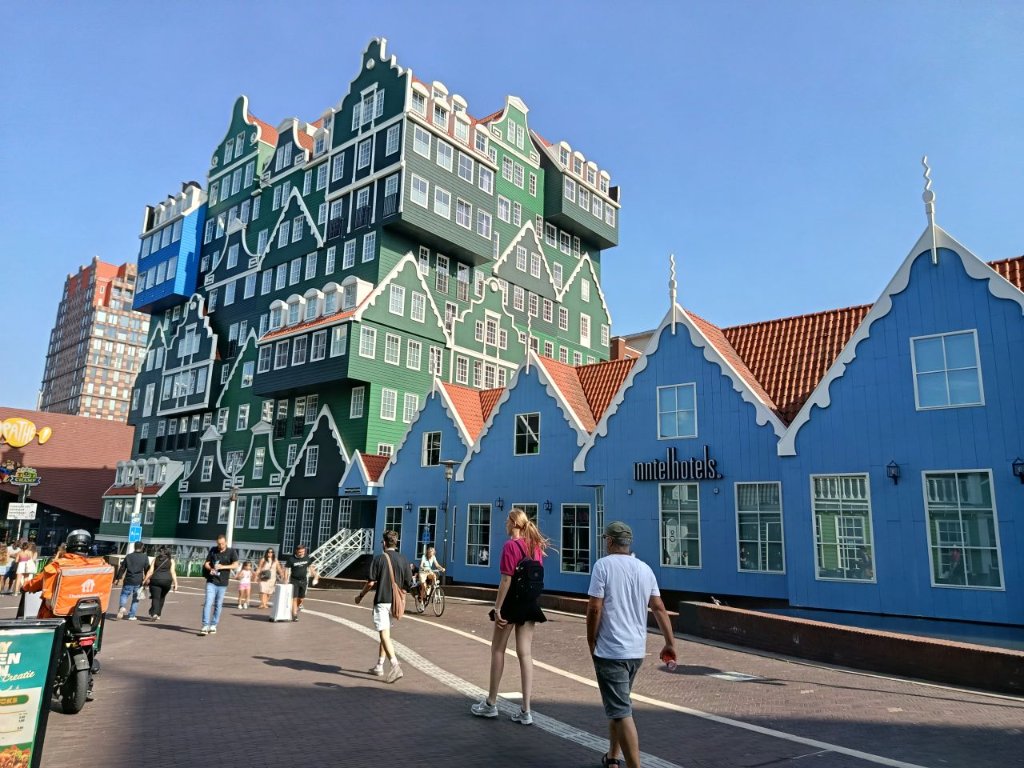
Echoes of Transformation: Zaandam’s Urban Narrative
Critical Observation
The true identity of a place emerges not from its architecture alone, but from the evolving life, energy, and human connection that unfold between the buildings over time.
Earlier this week, I had the privilege of watching the “25 jaar Inverdan” documentary with my colleagues. The documentary takes you on the journey of the large-scale transformation of the centre of Zaandam in the Netherlands from a dull and inaccessible area into an attractive and lively city centre that has gained quite some traction. At the same time, I was analysing another project I had recently visited, and part of the interview with Sjoerd Soeters gave shape to thoughts I had been mulling over for some time. So I decided to revisit and reacquaint myself with the area."
"If someone were to study the places we design today a hundred years from now, what would they learn about us? One of the recurring debates in urban design is how new developments should relate to or represent the past. But what I find interesting is that too often, we assume that respecting history means reproducing it. Now, whether one terms Inverdan a success depends on which lens one views it through: either by reinterpreting it in a way that reflects today's culture and life, or by remembering and learning from the past while drawing people in and letting them explore the history themselves."
"What I keep returning to is that the spirit of a place rarely comes from buildings alone. It emerges from the life that unfolds between them: the conversations, encounters, routines, celebrations and memories that accumulate over time. In the interview, Soeters speaks less about architecture than about hearing people laugh, children appearing in the city centre, the density of people in public space, and the energy that emerged after the transformation."
"And that to me makes the difference, because we design spaces that we may never fully inhabit ourselves. We may never experience them as future generations will. Yet if we are fortunate, the identity of a place, the genius loci, continues to evolve long after the drawings are archived and the designers are gone.
More observations await →
Browse the Index